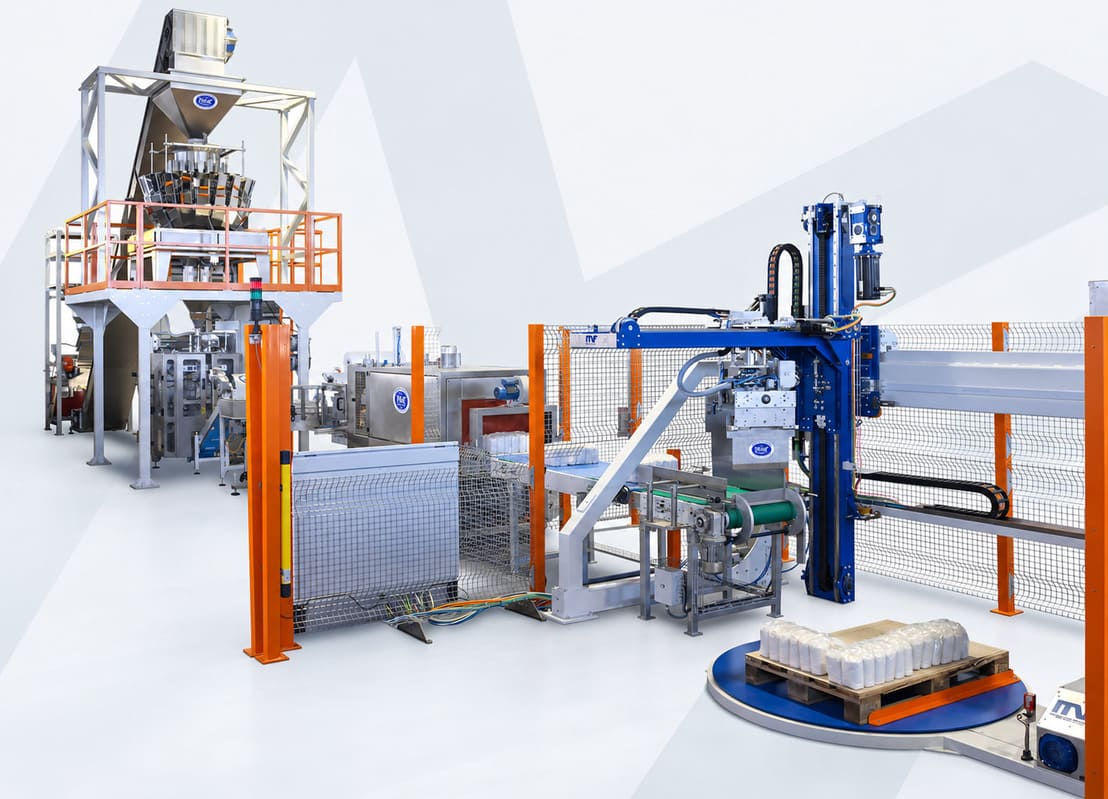
A Cartesian palletizer offers a dependable way to manage end of line operations where boxes and bundles must be positioned with accuracy and consistency. As production environments become faster and more automated, this type of equipment helps keep goods moving toward storage and shipping without interruptions.
Facilities that handle frequent product changes, limited floor space, or growing throughput demands often view this technology as a practical upgrade that strengthens the entire workflow.
Choosing the right palletizing system requires a clear view of layout constraints, expected output, product characteristics, and long term operating costs. The Cartesian approach fits these requirements because it follows linear movements along three axes.
This structure gives the machine predictable behavior, simple maintenance, and good adaptability for future changes.
This overview explains:
- Why a Cartesian palletizer suits box and bundle handling
- MF TECNO Palletizers for Boxes and Bundles
Why a Cartesian palletizer suits box and bundle handling
The Cartesian design is widely adopted because it offers flexible configuration, a reduced footprint, and straightforward maintenance. Its linear X, Y, and Z movements ensure predictable operation and stable performance.
Key strengths include:
- Flexibility for multiple product types
- Compact layout for limited floor space
- Straightforward line integration
- Safety features that support continuous operation
- Reliable performance during long production cycles
- Operator friendly interface
- Cost efficiency and fast return on investment
Flexibility for multiple product types
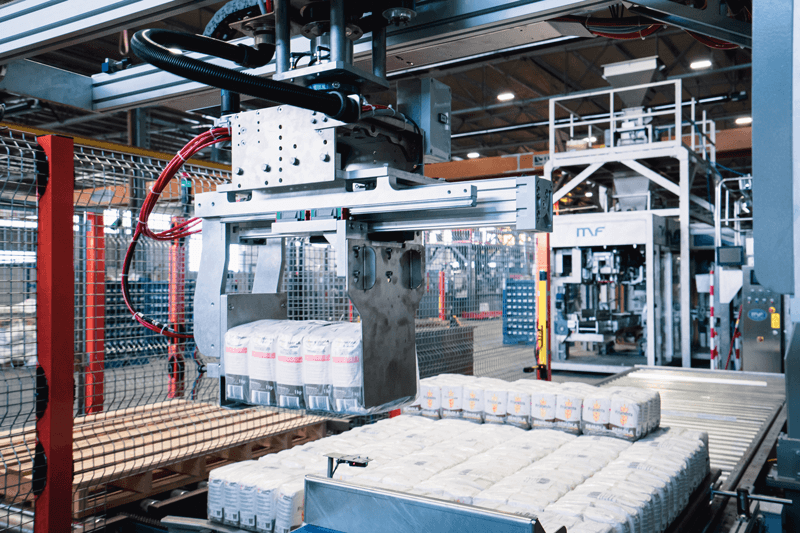
A key advantage is the system’s ability to work with various grippers and product dimensions. Boxes and bundles differ widely from one industry to another. With a Cartesian palletizer, format changes require limited effort because the machine structure remains the same. This flexibility helps companies respond to new orders or packaging updates without investing in extensive modifications. The predictable linear motion supports precise stacking patterns even when item size or weight varies.
Compact layout for limited floor space
Many production areas have height restrictions or narrow access points. The Cartesian structure fits these environments because the machine occupies a defined zone and does not need rotation clearances. The linear trajectory keeps movements controlled and confined. This allows production planners to organize the end of line efficiently and reserve space for conveyors, inspection points, or automatic wrapping systems.
Straightforward line integration
The palletizer connects easily to equipment such as case packers, shrink wrappers, and bagging machines. Since the system does not rotate, installation requires fewer layout adjustments. Once placed, the machine reinforces a stable and predictable production flow. Integration time is short, which limits downtime during commissioning. These characteristics are valuable for facilities that must maintain high availability and avoid extended line stops.
Safety features that support continuous operation
The machine follows a preset path along the X, Y, and Z axes. This repeatable movement reduces the chance of unexpected actions that could cause workplace incidents. Safety components such as photoelectric barriers, protected enclosures, and diagnostic systems help operators work confidently. The PLC monitors the cycle and identifies irregularities before they escalate. This structure keeps the working area safe while allowing the palletizer to operate continuously.
Reliable performance during long production cycles
Reliability comes from the simplicity of the mechanical design and the defined movement pattern. With fewer complex components, the risk of sudden breakdowns decreases. The linear path lowers mechanical stress, which supports long term durability. When companies manage multiple formats, they can switch requirements without major interventions. Consistent speeds and stable handling protect product integrity and help maintain steady output.
Operator friendly interface
Ease of use is another core strength. A clear interface guides the operator through each stage of the cycle and makes parameter changes quick. The logic behind the controls is simple, allowing staff to understand the machine after a short learning period. With immediate access to essential information, the operator avoids unnecessary stops and keeps production moving. This direct control also supports rapid troubleshooting.
Cost effectiveness
The Cartesian palletizer helps reduce labor needs and simplifies maintenance. These aspects support a fast ROI. Since the machine relies on linear motion and basic mechanics, wear parts are easy to access and replace. Energy consumption stays stable thanks to predictable movement. As productivity increases, companies reduce overall handling expenses and strengthen the consistency of their shipments.
MF TECNO palletizers for boxes and bundles
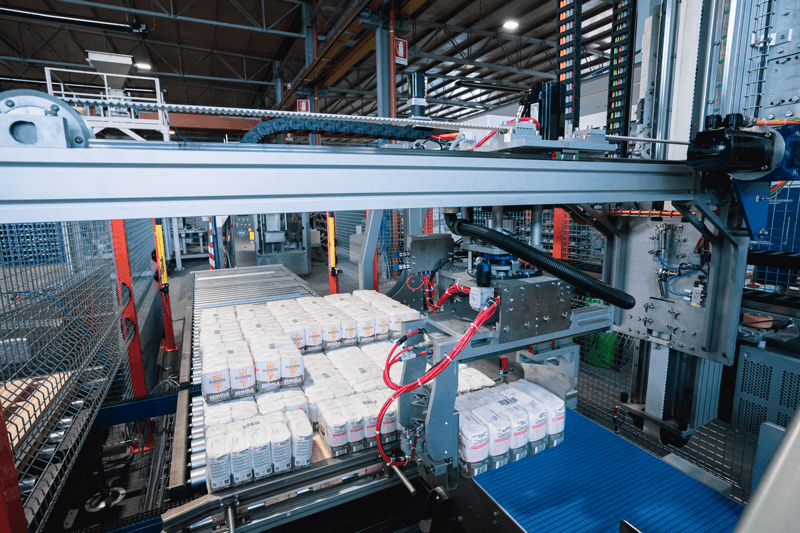
MF TECNO offers several Cartesian palletizers designed to manage boxes and bundles in different production environments. Each model supports specific throughput levels and layout constraints while maintaining the characteristics that define the Cartesian system.
Available solutions include:
- Smart Palletizer
- Smart Pro Palletizer
- PCA 700 Twin Palletizer
Smart Palletizer
The Smart Palletizer targets medium output needs. It handles loads up to 50 kg and reaches 500 cycles per hour. Its height remains below 3 meters, making it suitable for facilities with restricted overhead space. Multiple grippers are available for box and bundle applications. The streamlined design and reduced number of components keep maintenance simple. Brushless motors deliver accurate motion throughout the palletizing cycle.
Smart Pro Palletizer
The Smart Pro version increases overall performance, reaching up to 800 cycles per hour. It supports the same load capacity as the basic model but is designed for more demanding environments. A touchscreen PLC manages the full sequence and gives operators a clear view of all functions. Safety elements include protective screens and fall arrest systems. The compact layout remains suitable for tight installations.
MF PCA 700 Twin Palletizer
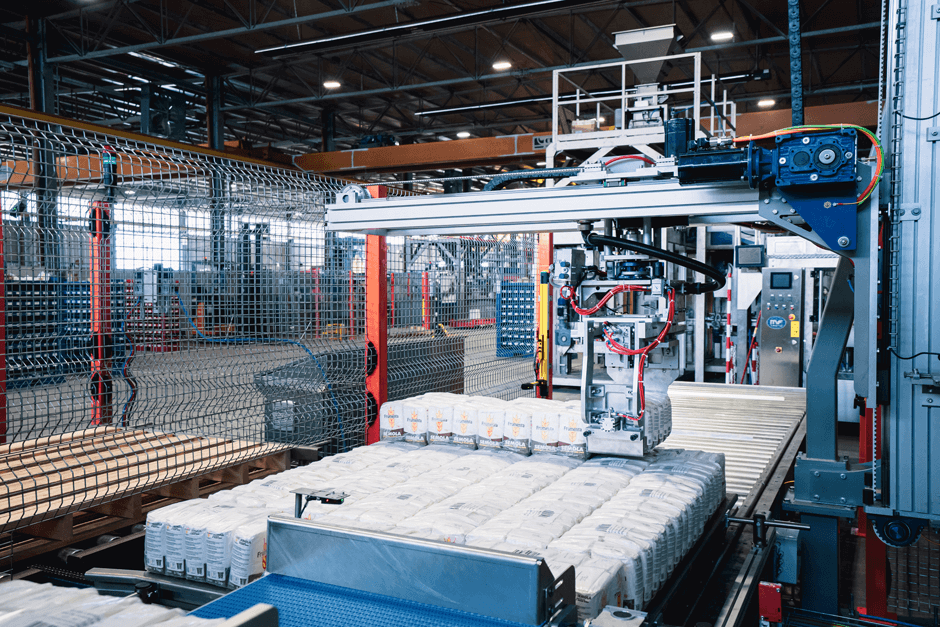
The PCA 700 Twin Palletizer features two palletizing stations that work in alternating sequence. This setup supports continuous operation because the machine switches automatically to the second station when the first pallet is complete. The model reaches 700 cycles per hour and suits medium to high output lines. The dual station structure boosts productivity and limits the risk of cycle interruptions.


 FREE QUOTE
  Machinery













 Request information