How to Design a Complete Automatic Bagging Line: From Weighing to the Finished Pallet
Designing an automatic bagging system starts with the result the entire process needs to deliver. Selecting the bagger is only one piece of the project: real throughput also depends on how the product is fed and weighed, the bag style, the bag closing method, conveying, and how pallets are handled at the end of the line.
That's why there is no one-size-fits-all configuration. Every system has to be engineered around the actual characteristics of the product, the facility's throughput targets, the available floor space, and the equipment already in place, confirming from day one how each stage will work with the others.
1. Nail Down the Design Requirements Before Selecting Equipment
The first step is to get a complete picture of the operating conditions. The material to be packaged, bag size, bag style, closing method, required bags per hour, available floor space and pallet configuration all directly shape how the bagging line is laid out.
It's just as important to define the project boundaries. Product may be fed from a silo, a bulk bag unloader or an existing process line; likewise, the facility may already have upstream or downstream equipment that needs to stay in place and be tied in. The design has to start from what is actually on the plant floor and the performance the operation needs to hit.
Key Inputs That Shape the System Design
Design input
How it impacts the line
Material
Determines the weighing method, conveying approach and any dust collection or product treatment needs.
Bag style and closing method
Drive bag placement, opening, filling, sealing or sewing, and the finished bag shape.
Target throughput
Confirms that every section has matching capacity and none of them becomes a bottleneck.
Floor space
Affects equipment footprint, access, service clearances and room to scale up later.
Finished pallet
Sets the stacking pattern, number of tiers, load stability and end-of-line handling.
2. Material Properties Drive Weighing and Conveying
Knowing the fill weight alone isn't enough. Bulk density, particle size, flow characteristics, moisture, aeration and friability can all change how the material behaves during weighing and transfer – and with it, the performance of the entire bagging line.
A free-flowing product calls for a different setup than a material that tends to pack or bridge. Dusty products need properly placed dust collection pickup points; friable products need gentle weighing and conveying to minimize breakage. When needed, material testing on customer samples confirms how the product actually behaves before the final configuration is locked in.
Requirements also vary by industry: flour and other fine powders demand tight dust control; in pet food, kibble size and fragility can be the deciding factor; salt, sugar, grain and plastic resin pellets each have different properties that influence materials of construction, weighing and handling.
3. The Bag Is Part of the Process, Not an Afterthought
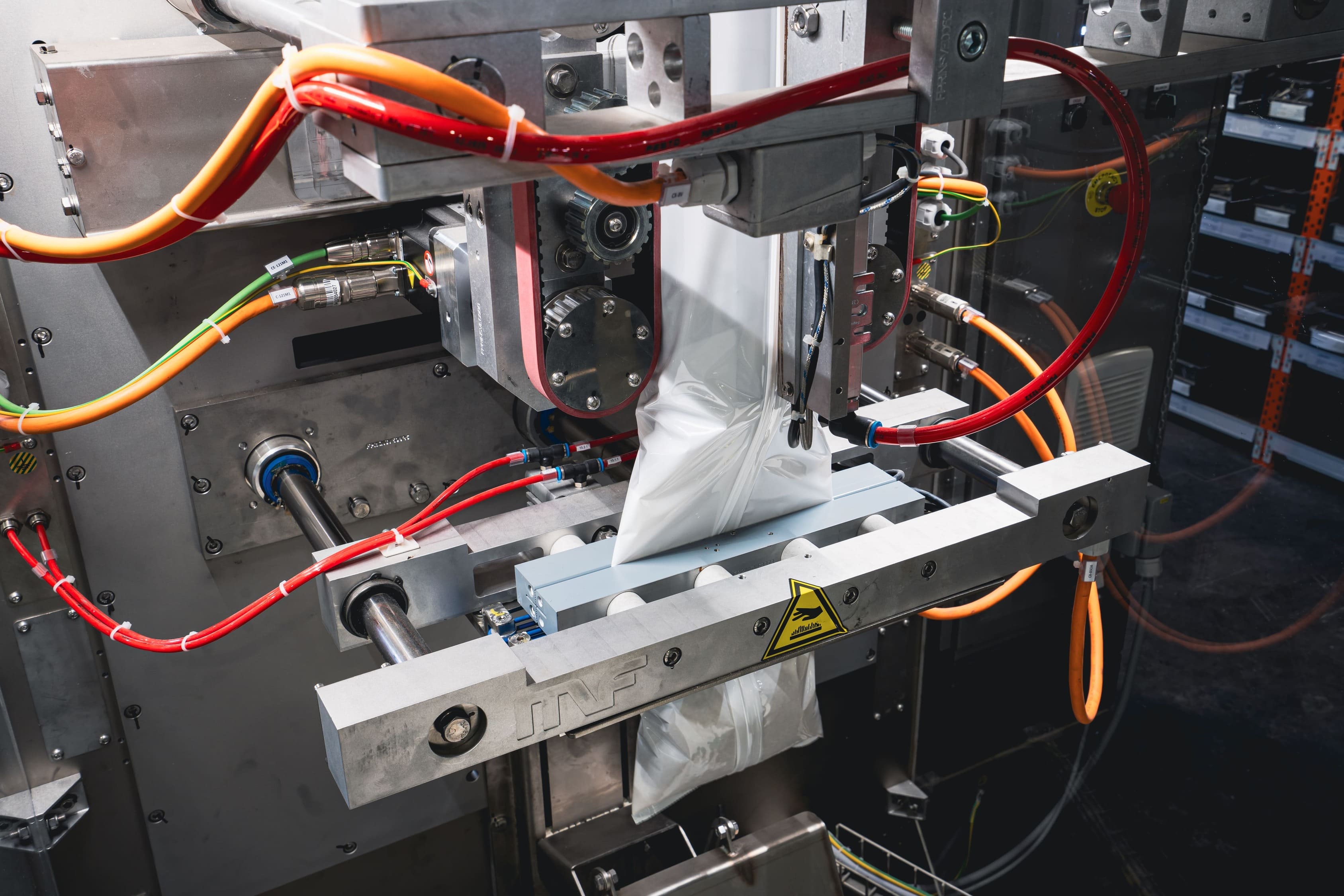
Bag material, dimensions, film or ply thickness, mouth style, gussets and closing method all need to be compatible with automated handling. Loose bag tolerances can cause problems with bag pickup, opening, filling or closing – and lead to unplanned downtime.
The bag also affects everything after the fill. How the product settles in the bag determines the finished bag shape and, in turn, how stable it is on the pallet. That's why product, bag and bagger need to be evaluated together, not as three separate decisions.
4. Size Throughput for the Whole Line, Not Just the Bagger
A machine's rated speed doesn't necessarily match the real-world throughput of the system. Weighing, filling, closing, conveying and palletizing all need matching capacities. If one stage can't keep up with the flow from the stage before it, it becomes the bottleneck of the line.
The same applies upstream: a bagger sized for a given rate can't deliver that rate if the product feed isn't steady enough. The design has to start from the target throughput and confirm that every section is working toward the same number, while also accounting for changeovers and the flexibility the operation will need over time.
An efficient bagging line isn't built by sizing each machine on its own – it comes from validating the capacity and continuity of the entire process.
5. From Bag to Pallet: Engineering End-of-Line Automation
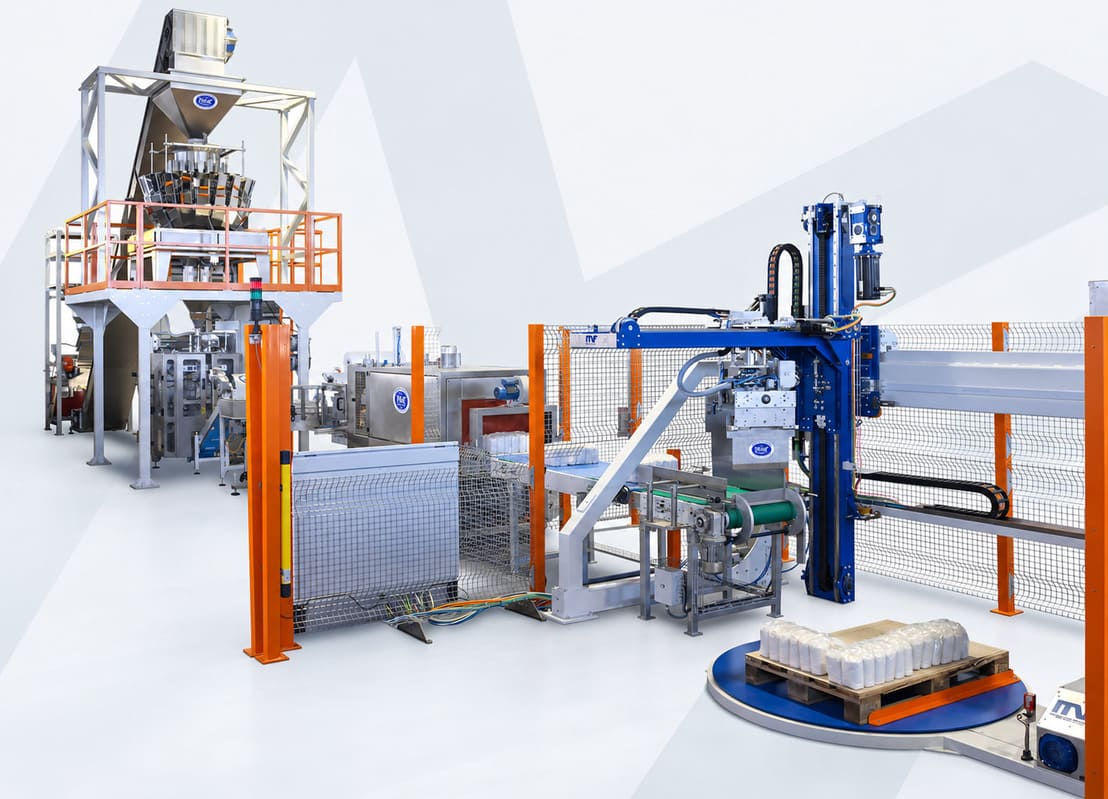
Once filled and closed, each bag has to move on to the next stages via belt or roller conveyors, and then to the palletizer. Pallet size, bag pattern, number of tiers and finished load height need to be known at the design stage, because they drive both the palletizer selection and load stability.
Further downstream, the line can include a stretch wrapper or another load securement method, depending on shipping and logistics requirements. The goal isn't just a properly filled bag, but a continuous flow that carries the product all the way to a finished pallet, ready for the warehouse or the next shipment.
6. Plant Layout, Maintenance Access and Future Expansion
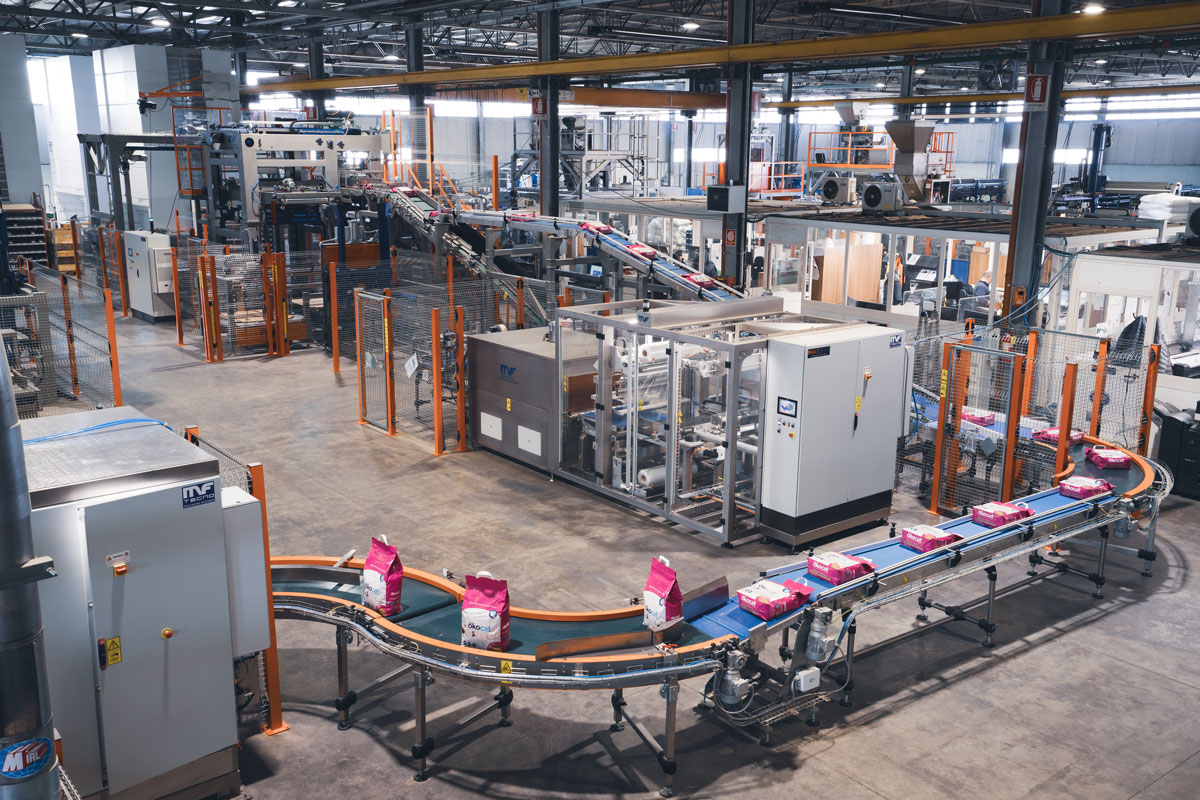
Layout isn't just about making sure the equipment fits. Building length, width and ceiling height, existing equipment, dust collection points, walkways and forklift traffic all need to be considered alongside access for cleaning and maintenance.
Tight clearances, unnecessarily long conveyor runs or hard-to-reach components make day-to-day operation harder than it needs to be. When floor space allows, future expansion – such as adding a palletizer later – should be planned in from the start.
7. Why to Engineer the Line as One Integrated System
When product, bag, throughput, layout and end of line are evaluated together, choosing a complete turnkey line becomes a technical outcome of the design rather than a collection of separate machines. Each stage has to receive product cleanly from the one before it and hand it off to the next at a compatible rate.
That doesn't mean every project starts from a clean slate: a new line can also integrate existing equipment. It does mean that interfaces, controls logic, capacities and responsibilities across the entire process have to be defined in a coordinated way.
How MF TECNO Approaches Turnkey Bagging Lines
MF TECNO delivers complete lines from start to finish: preliminary analysis, layout, engineering, testing, installation, start-up and service. Because the equipment is manufactured in-house, the configuration can be tailored to the product, the packaging and the facility, with bagging coordinated with downstream conveying, palletizing and pallet handling.
For the customer, a single source of responsibility for every section of the line also means simpler management of interfaces, service and spare parts – which matters most when the process involves multiple machines and uptime is critical.
From Throughput Target to Turnkey System
Designing an automatic bagging system starts from the result you need to achieve and the real conditions the equipment will run in. Product, packaging, throughput, layout and finished pallet should all be evaluated as variables of the same process.

 FREE QUOTE
  Machinery













 Request information