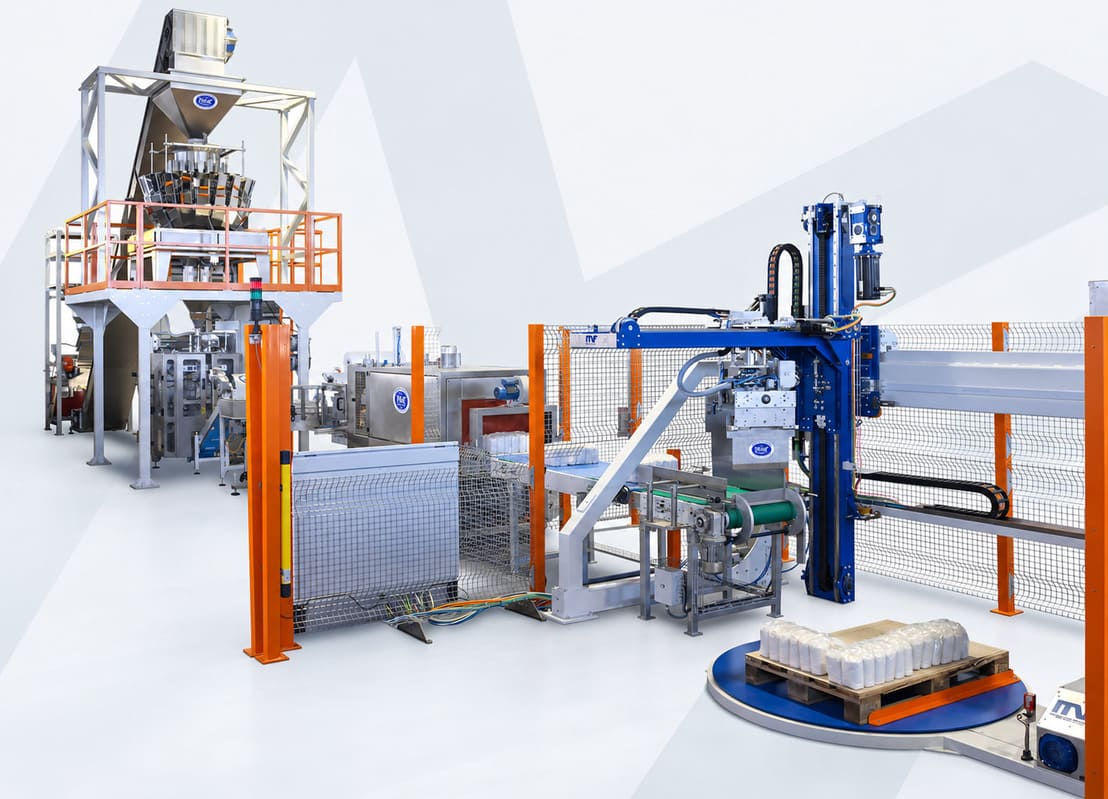
Most packaging lines don't stop because the hardware fails. They stop because no one can figure out how to reconfigure it fast enough. That's not a machine problem. That's a design problem, and it's bleeding your margins every single shift.
The Complexity Bottleneck Is Costing You More Than You Think
Your expensive palletizer is sitting idle. Not because it broke. Because reconfiguring it means calling the one specialist who understands the coordinate system.
Manual X, Y and Z coordinate entry isn't just slow. It's a single point of failure. One wrong digit, one distracted operator, and you're looking at a full line stoppage. That downtime has a price tag. It compounds. And most manufacturers are absorbing it silently, every week.
Complexity isn't a feature. It's overhead. The machines that win in today's market are the ones your entire team can operate, not just your best engineer.
Goodbye Coordinates. Hello Drag & Drop.
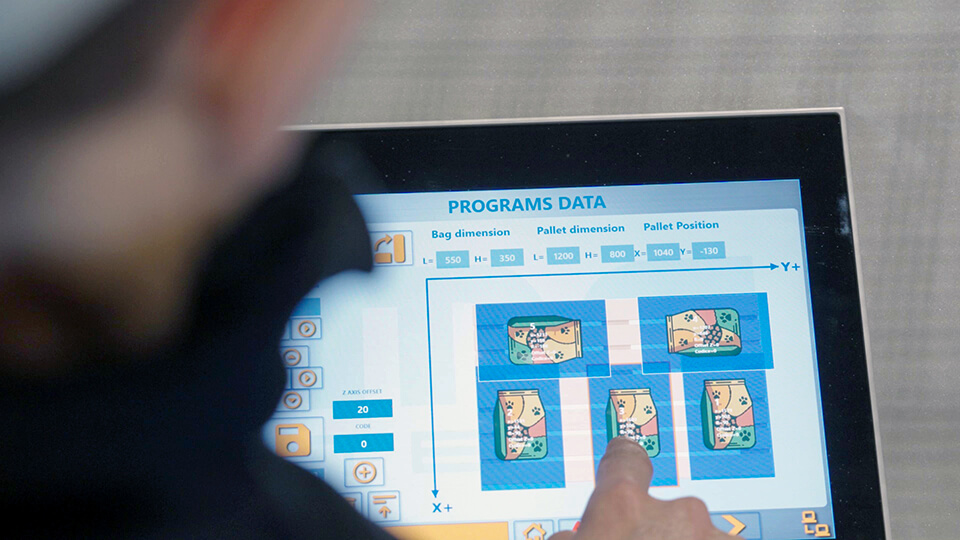
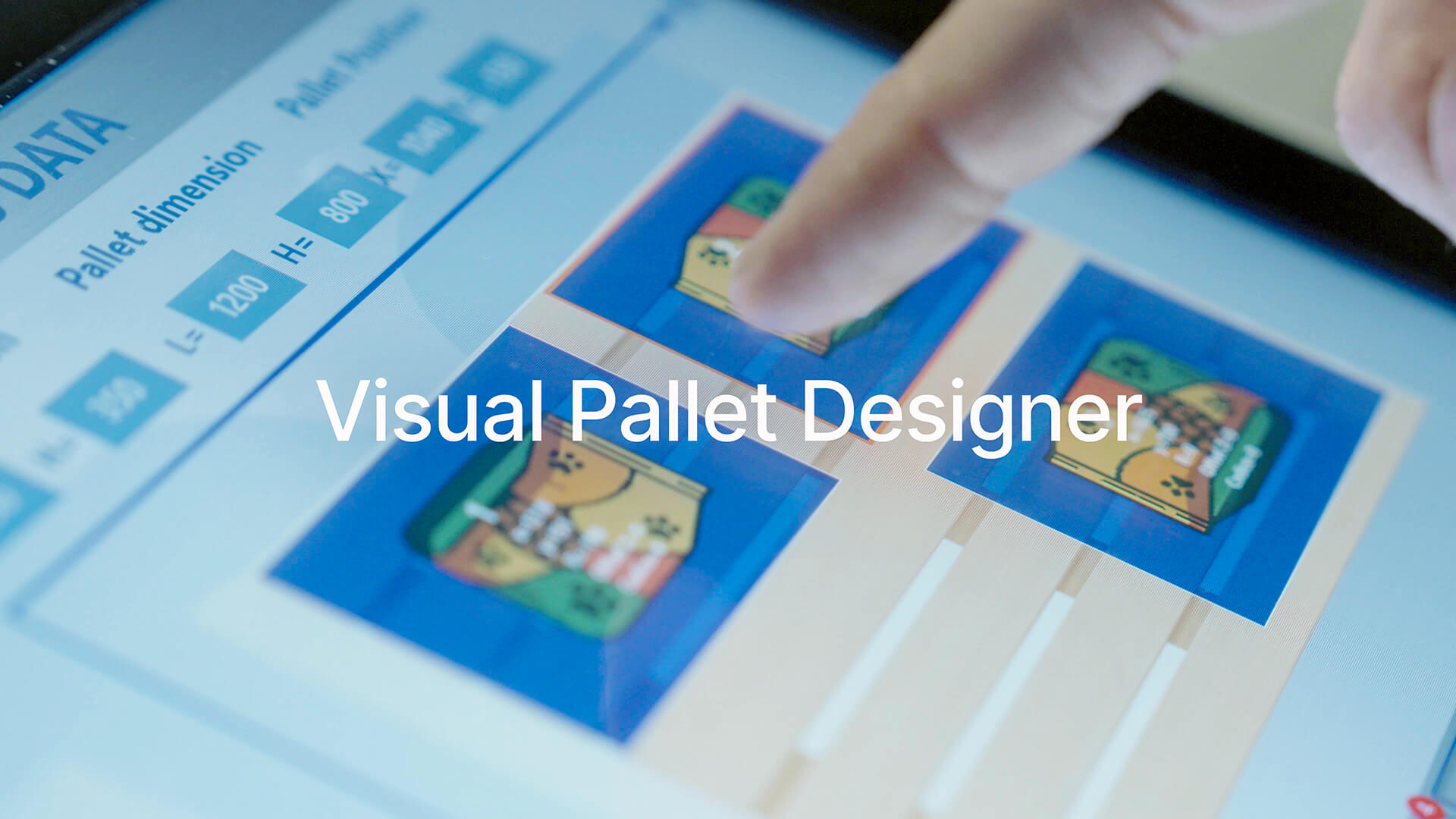
We built the Visual Pallet Designer because we were tired of watching capable operators fail at interfaces designed for engineers. It's an HMI that treats your team like adults, not data entry clerks.
Operators drag bags directly onto a live graphical pallet view. What they see on screen is exactly what the robot builds. No translation layer. No coordinate guesswork. No specialist on call.
→ Zero Technical Friction — Any operator who uses a smartphone can configure the robot. Day one. No training week required.
→ Errors Caught Before They Happen — What looks right on screen is what the robot builds. Wrong placement is impossible to miss, before it reaches the pallet.
→ Format Changes in Seconds — New bag size, new stacking pattern, done before the line even notices. Stop scheduling downtime for configuration.
R&D Is Never a "Nice to Have"
"If it ain't broke, don't fix it." That mindset made sense when markets moved slowly. Today, it's how companies quietly fall behind, not in one dramatic moment, but line by line, quarter by quarter.
Cutting R&D doesn't save money. It defers costs until they're unavoidable. Here's where that bill shows up:
01 — The Expert Trap — One person holds the institutional knowledge for your entire line. When they leave — and they will — you don't just lose an employee. You lose operational continuity.
02 — The Inflexibility Tax — Every format change costs you hours of downtime. You're not paying for a machine problem. You're paying for an interface problem, repeatedly, on every SKU switch.
03 — The Talent Drain — The next generation of operators won't tolerate 1990s interfaces. If your machines look harder to use than a phone, you'll lose the hiring battle before it starts.
What We Actually Learned in the Field
The Visual Pallet Designer wasn't designed in a boardroom. We built it after watching operators fight interfaces that punished them for being human. What the industry calls "human error" is almost always a design problem with a design solution.
We measure progress in seconds saved per setup, and in operators who don't need a manual to do their job. That's it. That's the metric that actually moves the needle on your floor.
We handle the engineering complexity so you don't have to manage the operational fallout. Your team should be running the line, not decoding it.
"Every format change your line can't handle quickly is a contract you're one day closer to losing. How many are you absorbing right now?"
Stop absorbing the cost of outdated interfaces. See the Visual Pallet Designer in action, and find out what your current setup is actually costing you.


 FREE QUOTE
  Machinery












 Request information