In today's industrial automation landscape, operational continuity is one of the main indicators of profitability.
For decades, the packaging industry has relied on reactive or preventive maintenance strategies.
Alongside these two approaches, linked respectively to unexpected machine downtime and to maintenance scheduled at fixed intervals, Predictive Maintenance is now gaining ground.
This approach is based on monitoring the actual health of the equipment, making it possible to identify potential issues before they turn into unscheduled stoppages and to plan interventions only when strictly necessary.
The Specific Challenges of Packaging: Reducing Line Stoppages and Waste
Packaging lines operate at high cycle rates and under constant mechanical stress. In these environments, an unexpected machine stoppage triggers a knock-on effect across the entire logistics and production flow.
Preventing unplanned process interruptions safeguards productivity, preserves the integrity of packaging materials and keeps product waste to a minimum.
The MF TECNO Vision: Smart Systems for Integrated Industry 4.0
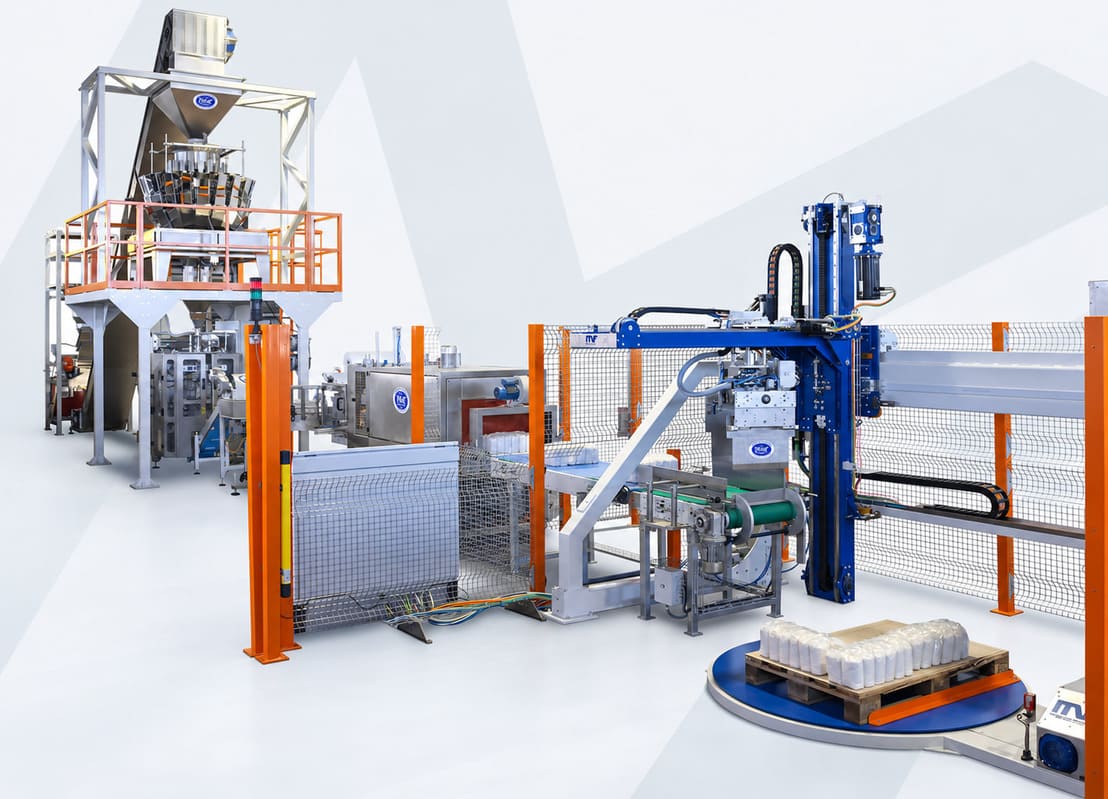
In this context of continuous technological evolution, MF TECNO designs its packaging systems as integrated solutions engineered for maximum reliability.
MF TECNO systems use open and secure industrial communication standards.
Preparing machines for the analysis of operating parameters means offering customers solutions that can communicate their working status and significantly optimise production processes.
Centralising status information allows plant management to monitor overall system performance remotely and in real time.

Operational Benefits, Economic Impact and Return on Investment (ROI)
Adopting predictive maintenance has a direct effect on key performance indicators, delivering a sharp reduction in costs and an increase in overall equipment efficiency.
Maximising OEE and Production Continuity
OEE (Overall Equipment Effectiveness) is the key metric for measuring the real productivity of a packaging plant.
Predictive maintenance acts directly on each of its components:
- Increased Availability: fewer sudden breakdowns means less idle time and fewer prolonged line stoppages for emergency repairs. Maintenance work is scheduled during planned production breaks or shift changes.
- Optimised Performance: timely correction of minor deviations and mechanical friction allows the machine to run consistently at its nominal design speed, avoiding precautionary slowdowns.
- Assured Output Quality: stable physical and mechanical parameters ensure every bag or pack is produced correctly, reducing packaging material waste and ensuring compliance with the required standards.
Reducing Total Cost of Ownership (TCO) and Managing Spare Parts
The economic assessment of industrial machinery cannot stop at the purchase price: it must take the entire life cycle into account.
Predictive maintenance significantly reduces recurring operating costs thanks to two key factors:
- Extended RUL (Remaining Useful Life): mechanical and electrical components can be used up to 100% of their operating capacity, moving away from early, calendar-based replacement.
- Optimised spare parts inventory: planned interventions reduce the need for high-value 'safety stock' in the warehouse, freeing up the company's working capital.
Strategic Planning of Maintenance and Human Resources
Shifting fault management from reactive to planned has a significant positive impact on how technical staff are organised. Plant maintenance teams can schedule their work well in advance, minimising unplanned overtime and emergency call-outs.
In addition, a complete history of operating data makes diagnosis easier for technicians and drastically reduces Mean Time to Repair (MTTR), while improving overall operator safety during maintenance work.
Proactive Remote Support and Advanced MF TECNO Services
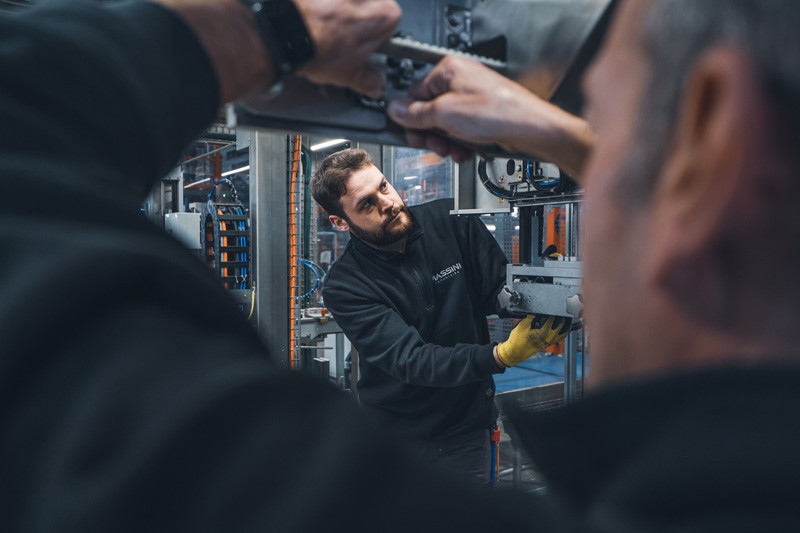
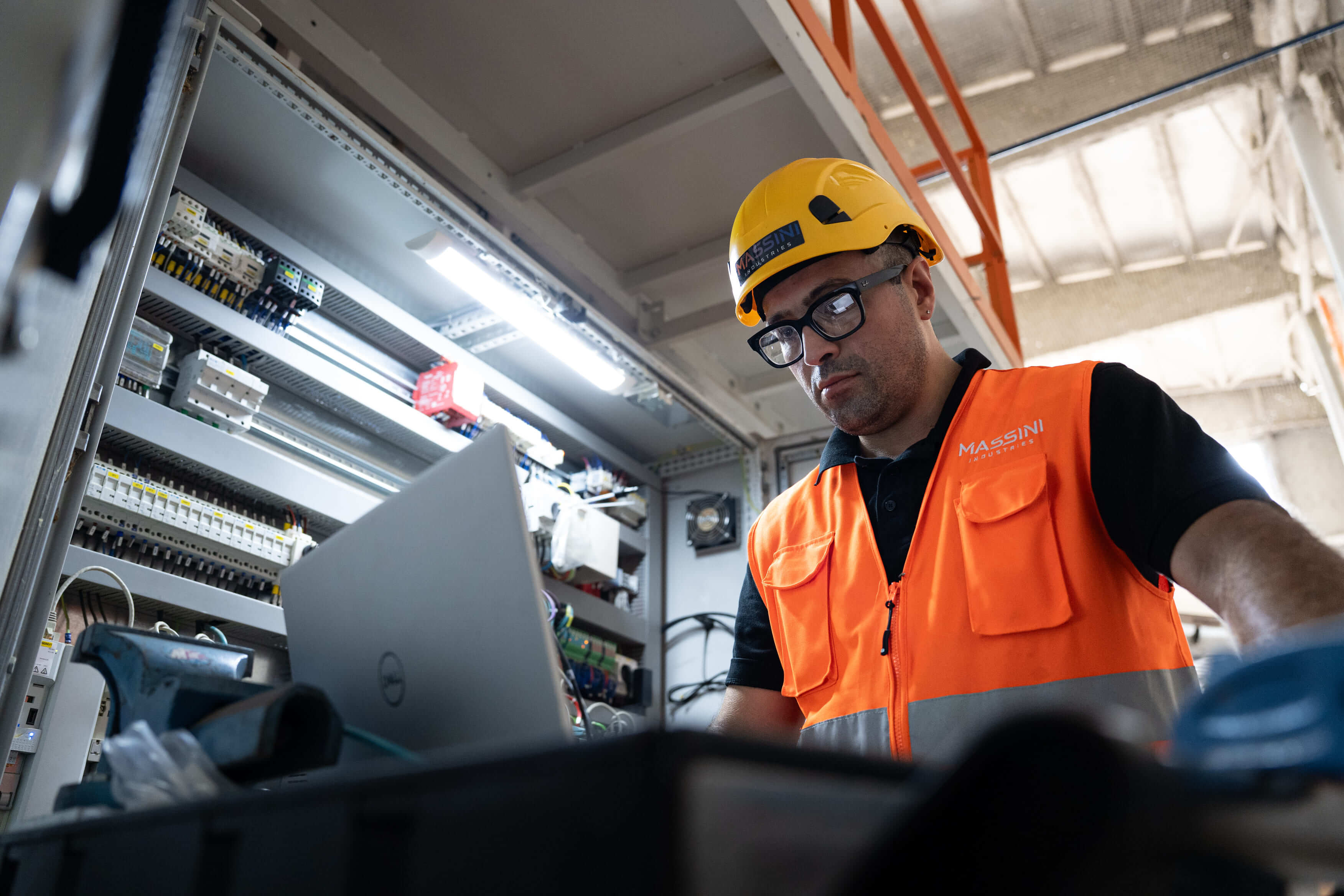
The service provided by MF TECNO builds a genuine operational partnership between machine manufacturer and end user. Through remote diagnostics and proactive monitoring, MF TECNO's specialist technicians can analyse operating data together with the plant's own team.
This ongoing support makes it possible to plan extraordinary maintenance or upgrades in a coordinated way, ensuring the right spare parts are available on time and maximising the return on the investment over the long term.
Conclusions and Future Outlook
Predictive maintenance is a key strategic lever for the future of the packaging industry. Integrating predictive technologies turns packaging lines into transparent, efficient and highly reliable assets.
Through this value- and profitability-driven approach, MF TECNO confirms its role as a strategic partner able to combine robust machine construction with maximum operational efficiency.
FAQ – Predictive Maintenance in MF TECNO Packaging Systems
1. How does predictive maintenance differ in practice from the preventive maintenance traditionally used in packaging?
Preventive maintenance is based on fixed time intervals or a set number of operating cycles, regardless of the component's actual wear. Predictive maintenance instead analyses the machine's real condition in real time, so action is taken only when a component shows genuine signs of degradation, avoiding premature replacements and sudden breakdowns.
2. How are in-house operators and maintenance staff trained to use these technologies?
Introducing predictive monitoring does not require complex IT skills from operators. MF TECNO provides dedicated support so that the in-house team can easily interpret status alerts, improving their operational skills and reducing fault diagnosis times.
3. What impact does predictive maintenance have on the environmental sustainability of the plant?
The impact is significant: preventing malfunctions drastically reduces both packaging material waste and scrapped product. In addition, keeping mechanical and electrical components in optimal working condition prevents abnormal energy consumption caused by friction or inefficiencies.


 FREE QUOTE
 Machinery













 Request information